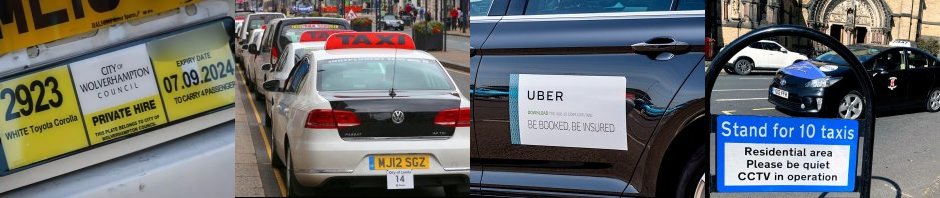
For trade anoraks like me, one feature evident in commentary when Uber first appeared more than a decade ago was a failure to even acknowledge the existence of the private hire trade. Therefore London-centric opinion pieces in the press would juxtapose Uber’s app, convenience, cheap fares and transparent pricing with the expensive and often unavailable black cabs.
Of course, it’s easier to present comment on a binary basis like that – Uber v London black cabs – than also include the great unmentionable, namely London’s minicab sector, which pre-Uber was the obvious alternative to black cabs. The minicab nuance was surely necessary to provide any real insight and analysis into Uber’s arrival, but was often conveniently ignored.
And this in turn fed the myth that Uber was something completely new, while one way of looking at the firm is simply as a global minicab brand pushing the booking and despatch technology envelope. And which is underlined in terms of regulatory regimes – both Uber and mincabs are private hire in terms of the licensing legislation.
This ‘don’t mention the private hire’ approach was also evident in a recent piece on the Leicester Mercury’s website (which was about the ubiquitous cross-border issue) albeit in a different respect to the omission in the Uber v London black cabs debate.
So the Mercury’s piece juxtaposes Leicester’s black cab equivalent (hackney carriages/HCs) with ‘taxi’ vehicles working in Leicester but licensed elsewhere, primarily Wolverhampton.
Of course, the ‘taxis’ licensed in Wolverhampton are in fact private hire vehicles (PHVs), but the article conveys the impression that these Wolverhampton-licensed ‘taxis’ are working in Leicester because the latter local authority imposes a numerical limit on the Leicester-licensed ‘taxis’, which are actually hackney carriages.
But, as in London, the PHVs are simply filling the cab left by the black cab/HC sector. However, the great unmentionable in the Mercury’s piece is the existing private hire sector there – as in the vast majority of other towns and cities, there’s generally a bigger private hire sector than hackney carriages. So the latest DfT stats shows that Leicester has 199 HCs, but 1,334 PHVs. The Mercury’s piece effectively ignores the existence of the latter.
However, where the cross-border PHVs come in is that they provide an alternative route to licensing because, as the Mercury points out, it’s a lot easier to licence a PHV in Wolverhampton than Leicester, while PHVs licensed in the former can come and work in the latter because of the ‘right to roam’ feature under the legislation. But, in essence, Wolverhampton provides an alternative to Leicester for PHVs in licensing terms, and not to the HCs in the way portrayed by the Mercury.
Another confusing aspect to the piece is the use of the term MoT as regards comparing the cities’ respective licensing regimes. In essence, HCs and PHVs need an MoT just like any other motor car, but in general terms they also need additional inspections usually administered by individual licensing authorities. These are often referred to as ‘taxi’ ‘MoTs’, but technically speaking they aren’t MoTs, although broadly similar, but usually with a few trade-specific items included (such as fire extinguishers and fare meters, where appropriate).
(Some local authorities contract out their inspections to DVSA MoT garages, and to that extent there may to an overlap between the two regimes, and some local authorities do also offer actual DVSA MoTs as part of their own in-house testing process, or the alternative of a ‘compliance certificate’, which can be used in lieu of an MoT. But with around 350 UK licensing authorities each with their own approach to testing and inspection, it’s perhaps unsurprising that these matters are often confusing.)
By the same token, the Mercury article’s reference to the Government’s best practice guidance (via a Wolverhampton council statement) on vehicle inspection and testing arguably further confuses rather than clarifies, because it’s more of a statement on the basic legal requirement relating to MoTs rather than individual licensing authorities’ in-house/add-on inspection regimes. And this is surely incorrect:
A spokeswoman for the City of Wolverhampton Council told LeicestershireLive the authority did not set the price for MOTs, with drivers expected to have them carried out at “any DVSA (Driver and Vehicle Standards Agency) MOT station, as per the government guidance”, at whatever price the garage charged.
‘Any‘ DVSA station? I thought Wolverhampton Council had set up a nationwide network of designated testing centres, and DVSA MoT testing centres can apply to their licensing department to be included in that network – it would clearly be difficult to require 30,000 PHVs to attend Wolverhampton for inspection from all over England. Indeed, another recent local article about the cross-border thing majored on the vehicle testing and inspection dimension. Thus as regards Blackburn, the Lancashire Telegraph reports:
A council has responded after taxi drivers queried why MOT tests were being conducted for the City of Wolverhampton at garages in Blackburn.
The Lancashire Telegraph can now reveal a total of 390 private hire drivers living and operating in Blackburn and Darwen have been licenced by the West Midlands authority, which is 80 miles away.
Concerns were raised by local cabbies, who said they had seen garages in Blackburn advertising MOTs for drivers licensed in the City of Wolverhampton.[…]
Blackburn with Darwen Council has 1155 drivers and 816 vehicles licensed with it.
The City of Wolverhampton Council confirmed it had approved garages in Blackburn and these were being used to carry out MOTs on private hire vehicles.
Which seems slightly at odds with the statement provided to the Leicester Mercury for the piece published a day or two later – however, maybe the inconsistency can be explained by a defensive PR stance from Wolverhampton Council, perhaps made possible in terms of the confusion with the whole MoT/inspection thing, as outlined earlier.
Attempting to deconstruct all this is probably best left to another time, but it all simply adds to the confusion surrounding the whole debate. In the meantime, though, Leicester Council at least provides a useful exposition of the cross-border regime:
A council spokeswoman said “regulatory frameworks” currently allowed “cross-border hiring” of drivers. She added: “This practice is legal under the Deregulation Act 2015, which allows private hire drivers to undertake bookings anywhere in the country, provided the booking is made through an operator licensed by the same council that licensed the vehicle and driver.
But which again surely outlines the regime prior to the Deregulation Act, which further facilitated cross-border hiring rather than simply enabling it, by allowing operators to sub-contract bookings to other operators, which wasn’t possible pre-2015. However, as a basic outline of the law it essentially demolishes the essence of the debate regarding cross-border Uber cars working out of Gatwick Airport. Which has all gone very quiet, despite numerous pieces in several local press sources, not to mention in the specialist trade press. I wonder why it’s all gone so silent?
(No time to investigate at the moment, but Wolverhampton Council’s webpages for ‘Approved MoT Testing Stations‘ and ‘Apply to become an approved MoT testing station‘ seem to have disappeared – maybe they have changed the policy recently, which would explain the conflict between the Leicester and Blackburn articles.)