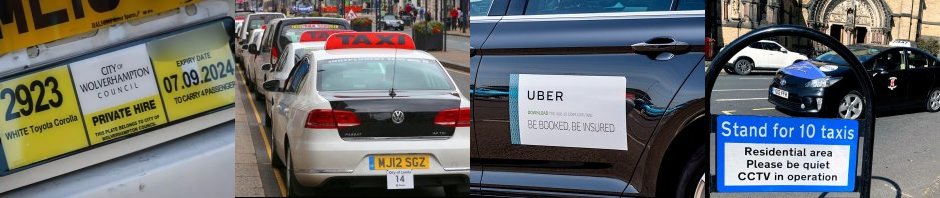
Several examples of exaggeration and total nonsense relating to cross-border illegality and enforcement have been highlighted on here recently. These generally emanate from members of the trade, but also from elected politicians and councillors. However, paid licensing officials might normally be expected to be more measured and accurate than those with a particular vested interest or axe to grind. But a recent example from the Bedford Council area seems to reverse this formula.
The press article on Bedford Today’s website is not untypical of the genre – local trades complaining about illegal activities of cross-border cars. However, the complaints are maybe a bit more specific than the usual broad brush accusations of illegality, which often turn out to be incorrect, or at least grossly exaggerated. Thus it’s reported:
The Bedford Action Group (which represents hackney and private hire drivers, including taxis and minicabs) claimed minicab drivers [private hire vehicle drivers – PHVs] from other areas are dropping off their fares in Bedford – and then illegally touting for fares by parking in taxi ranks when their licence only covers booked passengers.
Leaving aside the fact that the accusation is very probably about illegal plying for hire rather than touting (the former is a passive activity, such as waiting in a busy street; the latter is more proactive thing, which involves actively approaching/soliciting/importuning potential customers), the complaint is quite specific, as opposed to the more general claims about illegality and unlicensed cars and drivers.
However, Bedford Council provided this response to the LDRS:
“Private hire vehicles licensed by other local authorities can only operate in the borough when they are booked through a private hire operator licenced by Bedford Borough Council.”
Unfortunately this seems characteristic of the erroneous claims made by members of the trade – to reiterate, there’s nothing to stop PHVs licensed by other authorities dropping and picking up pre-booked customers in the Bedford area. The council continues:
“Complaints about a vehicle licenced by another local authority should be reported directly to the local authority that has licenced the vehicle.
“This is because only that authority has legal powers to investigate the complaint and impose any sanctions against the licence holder.
“If the complaint is made to Bedford Borough Council, we will refer it to the authority which licensed the vehicle, who would then need to contact the person submitting the complaint.”
To some degree this is correct, and indeed the LDRS report refers to Department for Transport guidance, which points out that local authorities can strike agreements with each other such that joint enforcement activities can take place. Thus with such an agreement Bedford Council would be able to undertake enforcement exercises against PHVs licensed by Wolverhampton City Council, while the latter and ‘partner agencies’ often publicise compliance activities in other local authority areas. (Sometimes called an ‘enforcement protocol’, or suchlike.)
However, as the trade representatives in Bedford point out, and as reported by Bedford Today, as regards other aspects of illegality there is surely no enforcement protocol necessary – for example, with regard to members of the public acting as ‘fake taxis’.
And which would seem to cover the criminal offence of plying for hire. For example, South Oxfordshire Council regularly publicises prosecutions against drivers licensed by other authorities who illegally ply for hire at the Henley Regatta.
Similar, with regard to the prosecution of a Wolverhampton-licensed driver for plying for hire at the Cheltenham Festival, the council there said:
Councillor Andrew McKinlay member for development and safety said: “So far Cheltenham Borough Council has prosecuted nine drivers for illegally plying for hire during Cheltenham Festival in March 2019 and there are additional court cases pending.“
Which I’d guess were undertaken unilaterally and without any need to co-operate with the authority which licensed the driver. On the other hand, that’s not to say that any such prosecutions won’t have implications for the driver as regards his license with the other authority (which, in any case, he’d be duty bound to refer such a prosecution to). Therefore:
Sarah Hughes licensing enforcement officer, continued: “Where drivers prosecuted are taxi or private hire drivers, the local authority in which they are licensed will be informed of any prosecutions and these authorities may then refer the matter to their licensing committee to review the drivers licence.”
So it may be that Bedford Council are being a tad disingenuous, or are perhaps not entirely up to speed with the applicable law. But at least they say:
“We are currently looking at the number of vehicles operating in our area that are currently licensed by other authorities.
“We will then look to discuss enforcement with the individual councils.”
Of course, it may be that, although the complaints being made by industry representatives in Bedford are reasonably specific, they could be exaggerating the scale of the illegality, and/or there’s insufficient evidence to support investigation and prosecution.
But even assuming that is the case, Bedford Today’s piece reads like the trade and council are at cross purposes. At best.