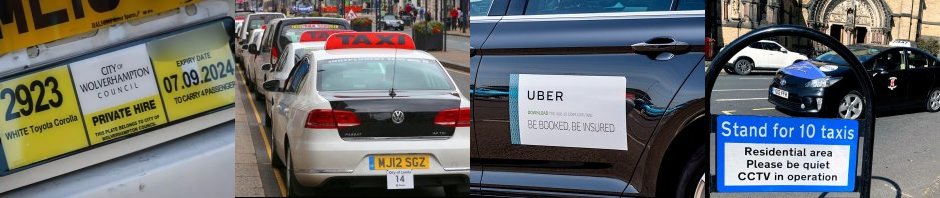
This was drafted last October, and obviously things have moved on since Uber’s second crack at Aberdeen sounded a bit speculative back then. And despite the various naysayers, it looks likely Uber’s Granite City application will be rubber-stamped, since the formal objections look either lacking in substance, or are misleading or just plain false. (On the other hand, anyone who thinks it’s simply a popularity contest perhaps aren’t aware of the nature of the licensing process.) Moreover, Aberdeen City Council granted the licence last time round, and Uber has held the same licences in Edinburgh and Glasgow for some years now, not to mention in many other English local authority licensing areas under a broadly similar process.
However, the following is more about the practical and economic difficulties relating to Uber entering the Aberdeen market, as opposed to being granted a licence per se.
A recent article on the Aberdeen Press and Journal’s website suggested that a shortage of late-night taxis could possibly be addressed by Uber launching in the city. This follows the global behemoth’s 2017 application for a licence to operate there, which was surrendered a couple of years later after its plan was shelved.
Which perhaps points to one slightly bizarre aspect to the more recent article, which arose from business pressure group Our Union Street’s white paper intended to rejuvenate Aberdeen’s famous thoroughfare. Thus the Press and Journal’s article makes it sound like whether Uber comes to Aberdeen is a matter of public policy as opposed to a commercial decision made by a private business.
To be fair, there’s undoubtedly a regulatory dimension to it all – specifically, Aberdeen City Council’s taxi and private hire licensing regime – but the purpose of this article is to suggest that Uber is unlikely to arrive in Aberdeen anytime soon, and even if it did it would make little difference to the problem of taxi undersupply.
Which essential point is in fact acknowledged in the Our Union Street paper:
“All Uber drivers need to be properly licensed, and we don’t have enough licensed taxi drivers in the city. It might be part of the mix in future.”
To that extent, what difference would Uber make in Aberdeen if its drivers merely came from the existing pool working for other firms? In turn, this underlines one of the great myths about Uber, namely that it’s conceptually something completely new in the industry, as opposed to a global brand pushing the technology envelope in terms of booking and despatch methodology. Of course, a global ‘taxi’ brand is without doubt something new, as was app-based booking and despatch. But similar apps are now effectively the norm in the established ‘taxi’ sector in towns and cities of any size, albeit alongside traditional booking methods.
But the tenor of the Press and Journal’s piece in particular implies that Uber is something conceptually different that could help solve the taxi shortage, whereas the reality would probably be more a case of rearranging the local industry’s deckchairs rather than fundamentally augmenting supply.
Our Union Street is perhaps on firmer ground when it mentions council licensing and the impact that might have on taxi supply:
“The local geography test that potential drivers need to pass is very demanding with a low pass rate. We need to understand the rationale behind previous decisions around this.”
Leaving aside the merits or otherwise of the hurdles facing new driver applicants, even if barriers to entry were substantially reduced, presumably this would also benefit other local operators, and to that extent Uber per se would make little difference.
Uber’s rationale for abandoning its plans to come to Aberdeen were never disclosed, but the stuff above about the hurdles facing new drivers might be a significant factor. Leaving aside another substantial myth that Uber’s cars and drivers are unlicensed (perhaps in overseas jurisdictions, but not domestically), in the UK its drivers by-and-large are licensed under private hire rules rather than those applying to taxis. Generally speaking, it’s a lot easier to licence as a private hire driver than the taxi equivalent, and to that extent that has suited Uber’s gig economy business model. But that simply wouldn’t work so well in Aberdeen, because the same entry barriers apply to private hire as taxi drivers.
By the same token, even where hurdles for new drivers apply equally to private hire and taxi licences (Brighton and Hove, for example), in England private hire vehicles can generally operate anywhere in the country, so Uber’s drivers are directed towards licensing authorities with the lowest standards and ease-of-entry more generally (most obviously, in relation to licensing fees and time taken to process new applicants). However, this route isn’t available in Aberdeen, because the Scottish legislation confines drivers and vehicles to working in the area in which they are licensed – of course, they can take passengers across local authority borders, but they can’t habitually work in the City of Aberdeen Council area on licences issued by Fife Council (say), or even by Aberdeenshire Council.
A related deterrent to Uber operating in Aberdeen perhaps relates to fare regulation – generally speaking, private hire fares are unregulated, and thus suit Uber’s surge-pricing model, which can mean that fares charged to passengers are several times the normal level. This is obviously attractive to drivers, and ensures that passengers can hire an Uber car effectively on-demand – no more queueing in the freezing cold. But this comes at a price, literally – a fare normally costing £8 could perhaps be £30 or more under Uber’s surge-pricing model.
So ignoring arguments about possible price-gouging and that Uber’s fare model is unfair on the less well off, it seems that Aberdeen’s private hire cars are required to fit taxi meters, and to that extent the fares charged are limited to the regulated maximum taxi tariffs set by the council (and this is also a Scotland-wide requirement, although more generally it’s not a Scotland-wide requirement for a private hire car to be fitted with a taxi meter, and to that degree fares are unregulated as per the English model unless a meter is actually fitted).
Another factor militating against Uber’s presence in Aberdeen is that, contrary to what many passengers will say, Aberdeen’s regulated tariffs aren’t particularly high, and the city is ranked at just 219 of 344 UK licensing authorities listed on the industry-standard Private Hire and Taxi Monthly tariff league table. (The tables are on the crude side, and don’t even take account of nighttime and unsocial hours premiums, but they’re nevertheless widely used and cited, and are at least kept up to date and must require a significant effort to maintain.)
So as well as meaning Uber’s surge-pricing model might not be feasible in Aberdeen, the low-ish regulated tariffs would place some constraint on availability, even assuming the council largely dismantled barriers to entry in terms of quality standards.
Therefore regulatory and licensing factors peculiar to Aberdeen or pertaining to Scotland-only more generally were very probably all relevant to Uber’s decision not to enter the Aberdeen market in 2019, as was the city’s oil-related economic slowdown which was posited back then.
Of course, in the more recent historical context, lockdown and the aftermath has been instrumental in stifling taxi numbers across the UK, and indeed in local markets throughout the world. The precise reasons for this are to an extent well rehearsed, but a full examination of the various factors would require a separate article.
But, in some UK areas at least, Brexit and free movement of labour has been detrimental to the number of new taxi drivers, while Supreme Court decisions categorising Uber drivers as ‘workers’ rather than self-employed and deeming Uber to be the principal rather than agent in terms of VAT have also been detrimental to its UK expansion. Moreover, the jury is still out (not literally!) on how these legal decisions will affect the UK taxi and private hire trades more generally, but any wider application would again be detrimental to end-users, particularly as these judgements have no doubt been instrumental in firming up Uber’s pricing model.
Likewise, from 1 October Scotland’s councils will be required to ensure applicants for new driver’s licences or renewals are aware of their responsibilities regarding the payment of income tax or that they have a checkable history of filing returns with HMRC, which will presumably deter the more fly-by-(Friday and Saturday) night element in many local areas.
So, as things stand, the future for late-night taxi passengers doesn’t look particularly rosy anywhere in the UK, irrespective of factors peculiar to Aberdeen in particular, and Scotland more generally.
Neither is the wider environment of traffic management likely to help, with the expansion of stuff like LTNs and 20mph zones lengthening journey times and meaning a more stressful driving environment for cabbies, making late-night/early morning interaction with drunken ‘revellers’ even less attractive. Aberdeen’s impending LEZ and expansion of the likes of bus-gates are similarly detrimental to the taxi trade, and hence to taxi users.
And if all the above isn’t evidence enough that even if Uber did arrive in Aberdeen it is unlikely to solve the city’s taxi woes, it’s surely worth underlining the fact that (correct me if I’m wrong) the business hasn’t started up in any new UK town or city since several years before lockdown. In fact this national slowdown in expansion may also help explain the decision not to open in Aberdeen, with an often more hostile regulatory environment, bad publicity and the disappearance of the easier to enter local markets perhaps explaining this curtailment.
Instead, Uber bought the popular despatch software Autocab used by the more traditional industry, and has piggy-backed on established local providers by using them to service customers booking via the Uber app in areas where Uber doesn’t directly operate. This provides an easier way to use the Uber brand to quickly penetrate new markets. But also provides some evidence to demonstrate that a direct Uber presence would simply mean existing drivers from existing firms decamping to work for the app-only business, thus only the brand and booking/despatch process would change rather than market supply and demand fundamentals.
Postscript
Since the above was drafted, it’s perhaps become evident that Aberdeen business insiders were aware that Uber was about to make a move on the city. An article in Professional Driver magazine a couple of months after Our Union Street’s white paper and the P&J piece said that Uber’s Local Cab ‘piggy-back’ option using established legacy providers had been terminated, thus presumably presaging a return to Uber’s more direct expansion model, as now demonstrated regarding Aberdeen, not to mention other UK towns and cities like Dundee, Hull and Ipswich. These are the first direct launches by Uber UK since 2017.