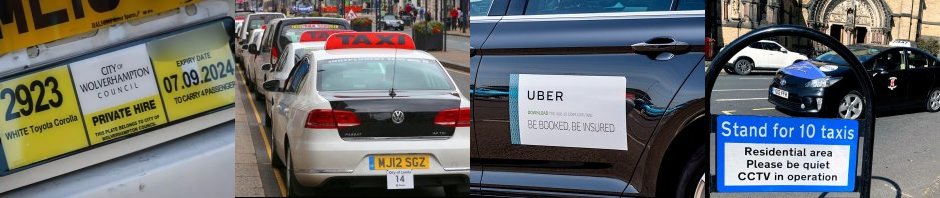
There are quite a few descriptors associated with Uber and similar operations like Bolt and Ola. Maybe the most prominent one is ‘ride-hailing’, which is problematic in two main respects.
First, if some kind of neoligism was required to describe the whole Uber thing and its generally oppositional or ‘disruptor’ status vis-a-vis ‘taxis’, then ‘ride-hailing’ has little in the way of merit, at least in terms of clarity and objectivity.
But what does ‘ride-hailing’ actually mean? No point in researching the etymology, but I’d guess the word ‘ride’ means it derives from US usage. Which, of course, was where Uber started. More importantly, ‘hailing’ is nonsensical and misleading, because in the ‘taxi’ context its meaning is historically quite well known, even for those not aware of the legal niceties. For example, the online Collins Dictionary defines it thus in this particular context:
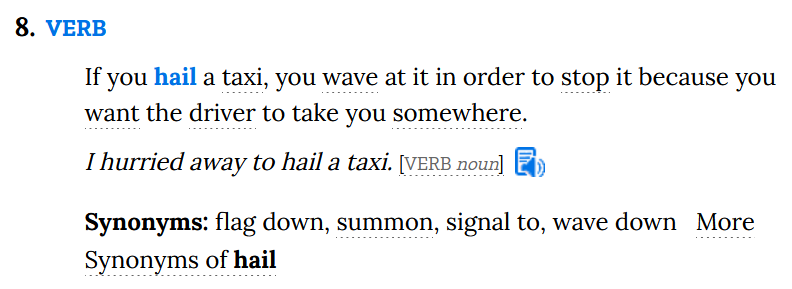
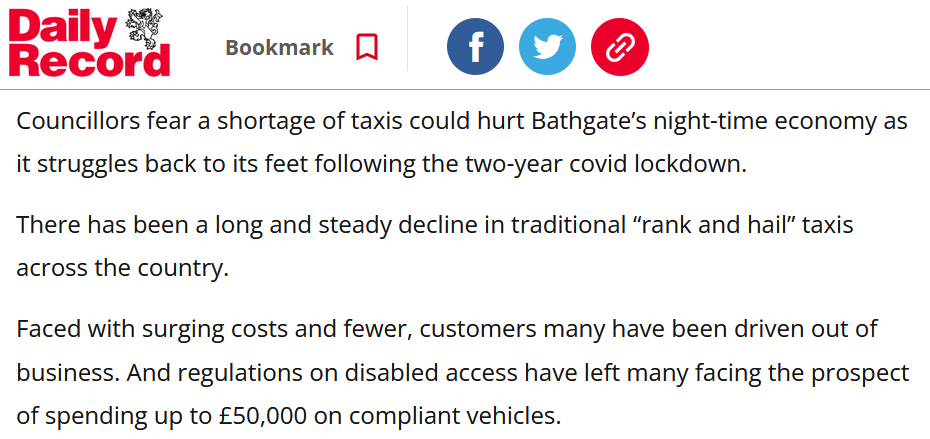
Which is quite straightforward. An extension of this is what is often called the ‘rank and hail’ markets. Which again is maybe slightly North American, but this Daily Record piece about the post-lockdown trade in West Lothian uses the term:
In terms of a more technical description, Google throws up the likes of this on Warwick District Council’s website:
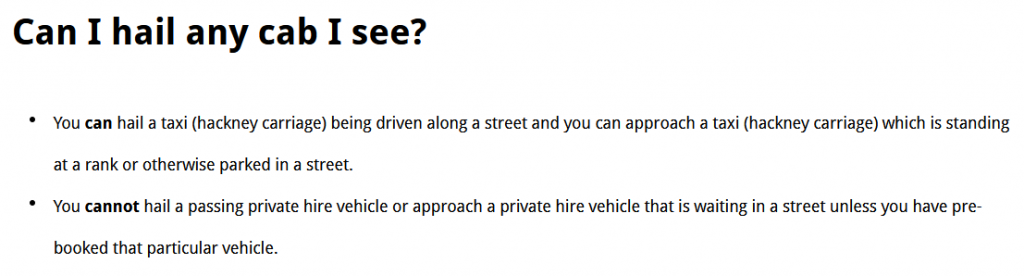
Both the rank and hail markets are encompassed in the term ‘plying for hire’, or ‘public hire’, which only taxis (hackney carriages) can do. ‘Private hire’, on the other hand, means pre-booking, historically primarily be telephone, or these days increasingly by using a smartphone app. Which is why the word [ride-] hailing with regard to Uber is misleading, since it refers to pre-booking via an app, thus private hire, and not hailing in the traditional sense, which is public hire.
Which might not matter, except to us anoraks, the lawyers, and council licensing officials. But it helps blur the line between the distinct legal entities of taxis and private hire cars, and of public hire and private hire respectively, which are hotly disputed differences in the industry, and can be associated with illegal practices, and can ultimately lead to danger, both for drivers and passengers.
(In fact, leaving aside the terminology, in the case of Reading Borough Council v Ali it was unsuccessfully argued that the graphical representation of a vehicle on the Uber app amounted to plying for hire, thus illegal for a private hire vehicle.)
Secondly, and maybe more importantly, the term ‘ride-hailing’ cements the impression that Uber et al are something different, whereas with regards to ‘ride-hailing’ they certainly are not. But which to that extent means any real discussion in terms of business, consumer and legal issues can be misleading. For example, earlier this year BBC News reported:
Uber taxis have been given permission to operate in Hull by the council.
About 250 drivers and vehicles from the ride-hailing firm will be licensed by the authority.[…]
Both Hull Cars and Drive currently offer apps to book private-hire vehicles in the city.
Leaving aside the ‘Uber taxis’ inaccuracy, the reference above to the ‘ride-hailing’ firm makes Uber sound like a different beast from Hull Cars and Drive, which are presumably more traditional ‘taxi’ operations (private hire, strictly speaking). But how? As the final third paragraph makes clear, the two Hull private hire operations referred to also offer app-bookings. So what’s the difference in substantive economic, business and licensing terms? None, really.
Or, put it another way, suppose Hull Cars had decided a decade ago to offer only app bookings? Would that mean it had overnight transitioned to become a ‘ride-hailing firm’? I’d suggest not – maybe to a ‘taxi’/private hire/minicab* business offering only app bookings.
But Uber, Hull Cars and Drive are all private hire operators. Maybe a more accurate descriptor for Uber, which encompasses the differences, but is perhaps more technically rigorous, is something like ‘app-only private hire operator’. Or, using looser, everyday language, an ‘app-only taxi firm’.
But not ‘ride-hailing’. On the other hand, that’s not to say that Uber isn’t in many ways different from the likes of Hull Cars in Kingston-upon-Hull, England, or Rainbow City Taxis in Aberdeen, Scotland.
These differences will be examined in future posts. But in relation to what I regard as the actual differences, the term ‘ride-hailing’ is just nonsensical and misleading.
* Minicab is largely an informal English – and London in particular – term for a licensed private hire vehicle. Thus to that extent Uber is a global minicab firm. It’s also worth noting that until c. 20 years ago minicabs in London were totally unlicensed (unlike provincial England), so prior to that ‘minicab’ was probably the most accurate description to distinguish them from taxis or hackney carriages, because ‘private hire’ is more of a technical and legal description, which obviously didn’t apply before the sector was regulated in the early 2000s.