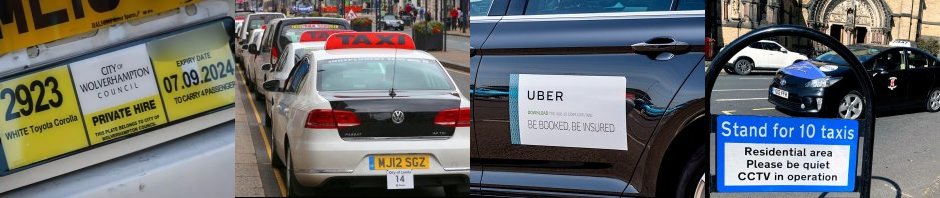
Predictably, Labour politician Chris Webb seems to have rowed back significantly on his claim from a couple of weeks ago, when the newly elected Blackpool South MP said:
“Blackpool is experiencing the scourge of unlicensed taxis in our treasured seaside resort. Uber and similar companies, which have no operating licence in Blackpool, are allowing passengers to use their unlicensed taxis uninsured, creating a real public safety risk.”
As was suggested here at the time, the more likely scenario was simply private hire vehicles (PHVs) licensed elsewhere and working in Blackpool, as is perfectly legal, and as is increasingly happening on an industrial scale throughout England, particularly with Wolverhampton City Council-licensed PHVs representing something like one third of all PHVs in the country.
So the Blackpool Gazette’s latest article is maybe over-egging things a bit when it says, in its new report on the topic: “The first steps will be taken to regulate the operation of Uber rides in Blackpool after a meeting between the company and Chris Webb.”
In fact they’re already regulated, by and large, because fundamentally they’re just doing what tens of thousands of PHVs are doing throughout England – working in a local authority licensing area other than the one they’re licensed in.
However, perhaps the Gazette’s article is on slightly safer ground when it states this about Mr Webb: “Uber has agreed to “open up conversation” with Blackpool Council about applying for an operating license in a meeting with him on May 29.”
Which would achieve what, precisely? That would enable Uber to use Blackpool-licensed PHVs as well as those licensed in Wolverhampton and elsewhere. So if Uber is really ‘flooding’ Blackpool with cars, then a local operator’s licence will maybe just burst the dam.
Thus Uber would just be replicating a local operator who is using both Blackpool- and Wolverhampton-licensed PHVs, as the Gazette had reported back in 2021. And presumably local operators will have the gumption to work all this out, so the thought of Uber gaining a Blackpool operator’s licence will be filling them with some foreboding.
But, again, all this is very probably more a case of the Blackpool trade’s deckchairs being rearranged (more literally than usual in this particular case…), and cars and drivers simply licensing elsewhere for reasons of cost and convenience, and drivers working for Uber rather than businesses local to Blackpool – private hire drivers will simply migrate to the provider where they’ll make more money, and basic supply and demand takes care of that if passengers prefer to use Uber. To that extent Uber is doing nothing different to what local providers are doing, and it’s just that Uber is bigger and better than them in many respects – rightly or wrongly, it’s Tesco and Asda v the corner shops once again.
Of course, there’s no doubt an element of illegality, and no doubt some PHVs are plying for hire and picking up passengers without a prior booking on occasion, but them’s the (oft-broken) rules. And Uber seems to have promised to use its app technology and GPS to mitigate any concerns in that regard.
But it probably won’t stop such practices, which is why it’s usually the job of local licensing officers to address these problems. And which is often reported in terms of licence suspensions, revocations and criminal prosecutions elsewhere in the country. Funnily enough, a Blackpool City Council website search of the council minutes only found one recent mention of Uber. A document entitled PUBLIC PROTECTION ANNUAL PERFORMANCE REPORT, with the ‘Responsible officer’ being ‘Jennifer Clayton – Head of Public Protection and Enforcement’, said:
From an enforcement perspective, the Licensing Service has not experienced any specific areas of concern in respect of the alcohol trade. However, the taxi trade is experiencing a difficult period due to an influx of out of area vehicles. This trend has become more prevalent since the summer of 2023. The Licensing Service cannot provide any measurable data as to why this is happening, although observations of operational officers and reports from local drivers suggest that the main causes are likely to be the emergence of Uber and other similar nationwide online private hire operators.
And what is perhaps most noticeable from the above is that there’s no mention at all – or even a hint – of any wrongdoing or enforcement issues. And the ‘difficult period’ being experienced by the taxi trade as a consequence of Uber et al seems to be about competition issues rather than illegality per se.
In the round, therefore, it’s probably fair to say that the illegality aspect is overdone, and that the false information about Uber being unlicensed and riding roughshod over the law are just smears attempting to undermine the competitive threat to local operators from Uber.
Of course, at the level of grassroots drivers it’s maybe a different story if the lower entry barriers to licensing in the likes of Wolverhampton means that there are more drivers working in Blackpool than if only locally-licensed drivers were allowed.
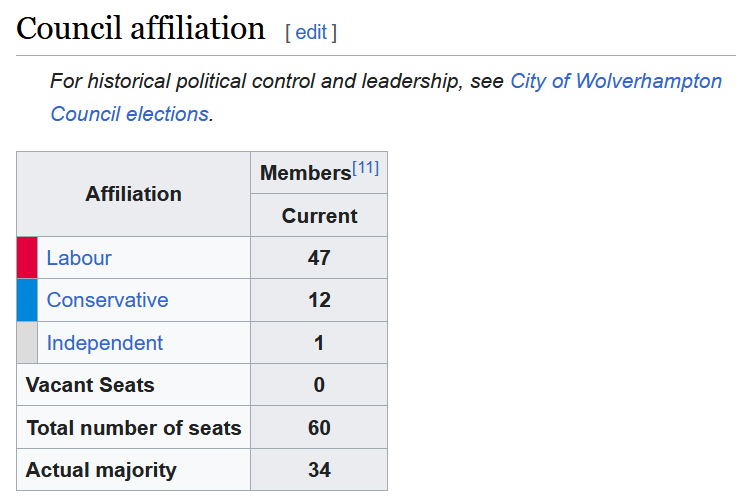
So rather than blaming Uber, if Mr Webb is so worried about Wolverhampton City Council’s sausage machine approach to licensing and labour markets, then it should perhaps be borne in mind the political make up of this local authority which has built an empire on the back of churning out cheap labour to feed Uber’s business model, not to mention hundreds of more traditional operators – according to Wikipedia:
And while there is no doubt an element of illegal plying for hire in Blackpool, or other workaday street-level rule-breaking and misbehaviour, this is normally the domain of local police and licensing enforcement officers.
Therefore maybe Mr Webb should be asking Wolverhampton City Council about these cross-border enforcement operations that the latter are never reticent about telling the whole world about. Or, if they haven’t done so already, and if rule breaches are as widespread as claimed, then maybe the two councils should agree an enforcement protocol allowing Blackpool licensing officers more jurisdiction over Wolverhampton-licensed cars, for example?
But maybe the most significant move signalled since Mr Webb became involved is Uber obtaining an operator’s licence for Blackpool, which would substantially increase the pool of cars and drivers potentially able to work under Uber’s umbrella. Maybe local operators should have been careful what they wished for when getting Blackpool’s then shiny new MP involved.